
How to Choose the Right Kitchen Benchtop
A Designer’s Guide to Natural Stone, Mineral, Sintered and Porcelain Surfaces in Australia
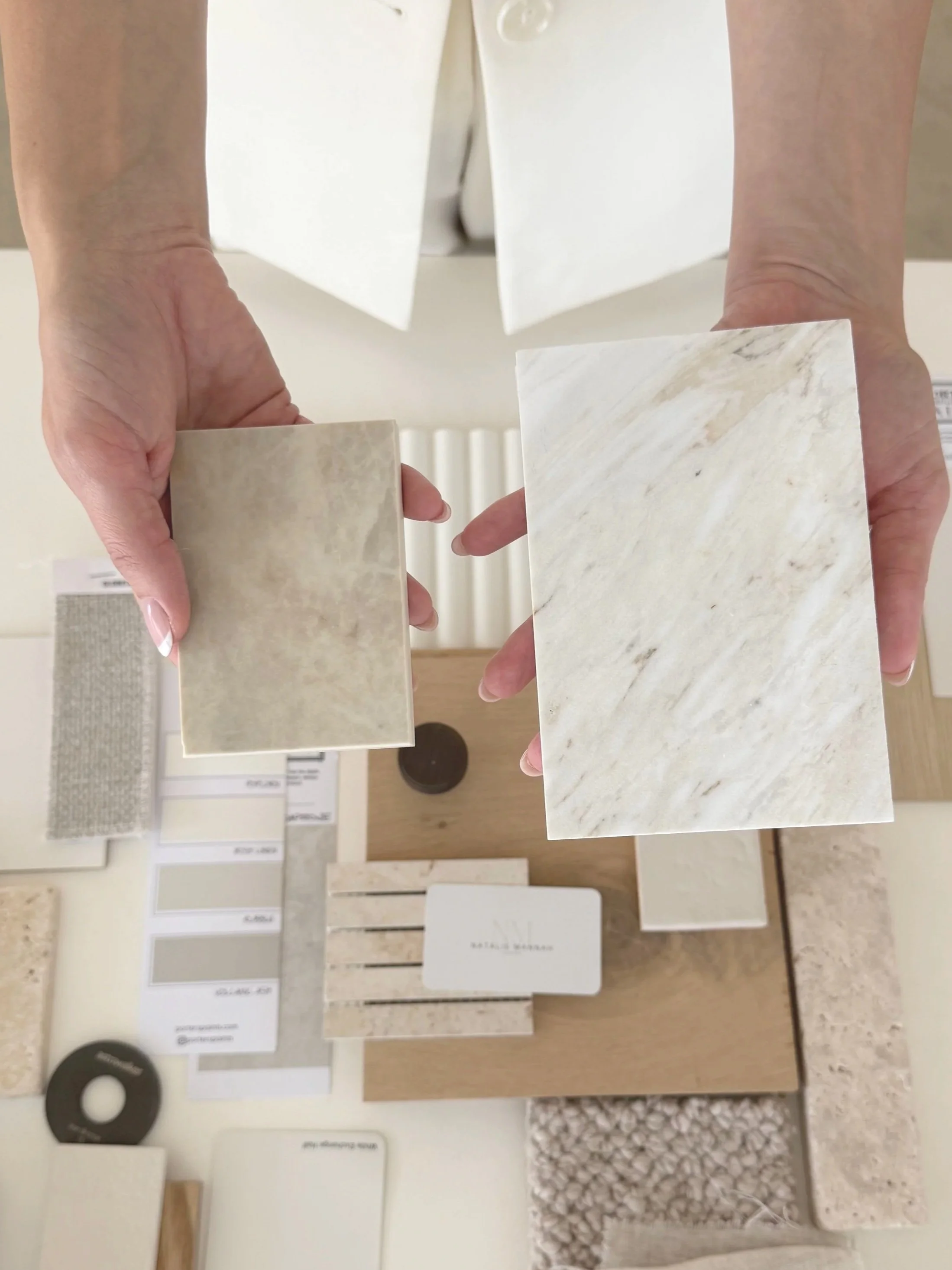
If you’re choosing your kitchen benchtop based on colour alone, you’re only solving part of the problem.
A benchtop is not décor. It’s infrastructure.
It’s one of the hardest-working elements in your kitchen. The material you select will influence fabrication, edge detailing, durability, maintenance requirements and long-term value.
As an interior designer working on kitchen renovations and new builds in Sydney, I guide this decision carefully. Because in the current Australian market, there are multiple high-performing options — and they are not interchangeable.
There isn’t a universally better material. There’s a better fit.
Here’s what you need to understand before making that choice.
The Australian Context: What’s Changed?
In Australia, traditional high-silica engineered stone has been prohibited due to health regulations affecting fabrication and installation.
In response, manufacturers have reformulated mineral-based surfaces using alternative compositions.
At the same time, sintered stone and porcelain have continued to grow in popularity, and natural stone remains a premium option.
Understanding the difference between these categories is essential during kitchen design.
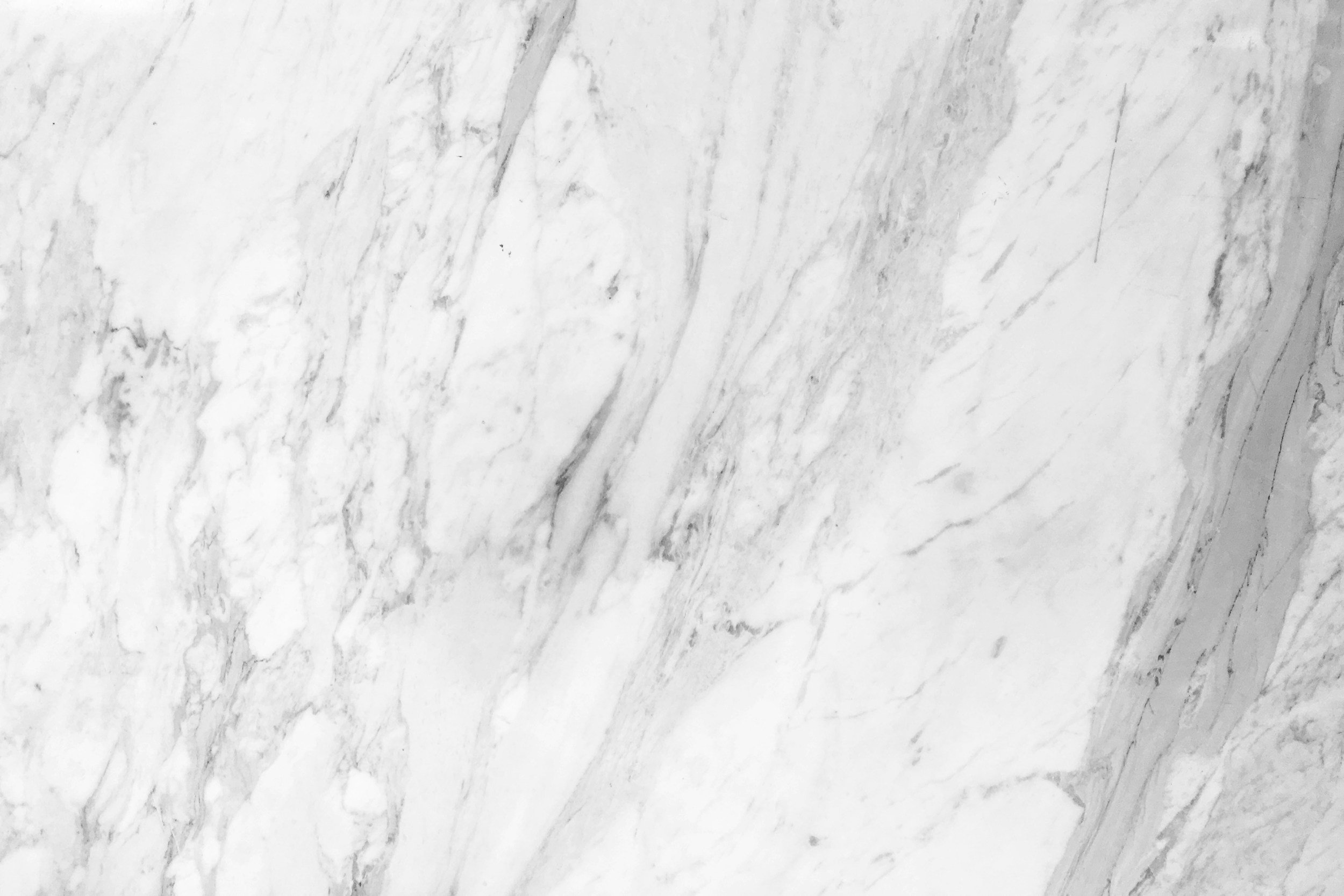
Natural Stone Benchtops
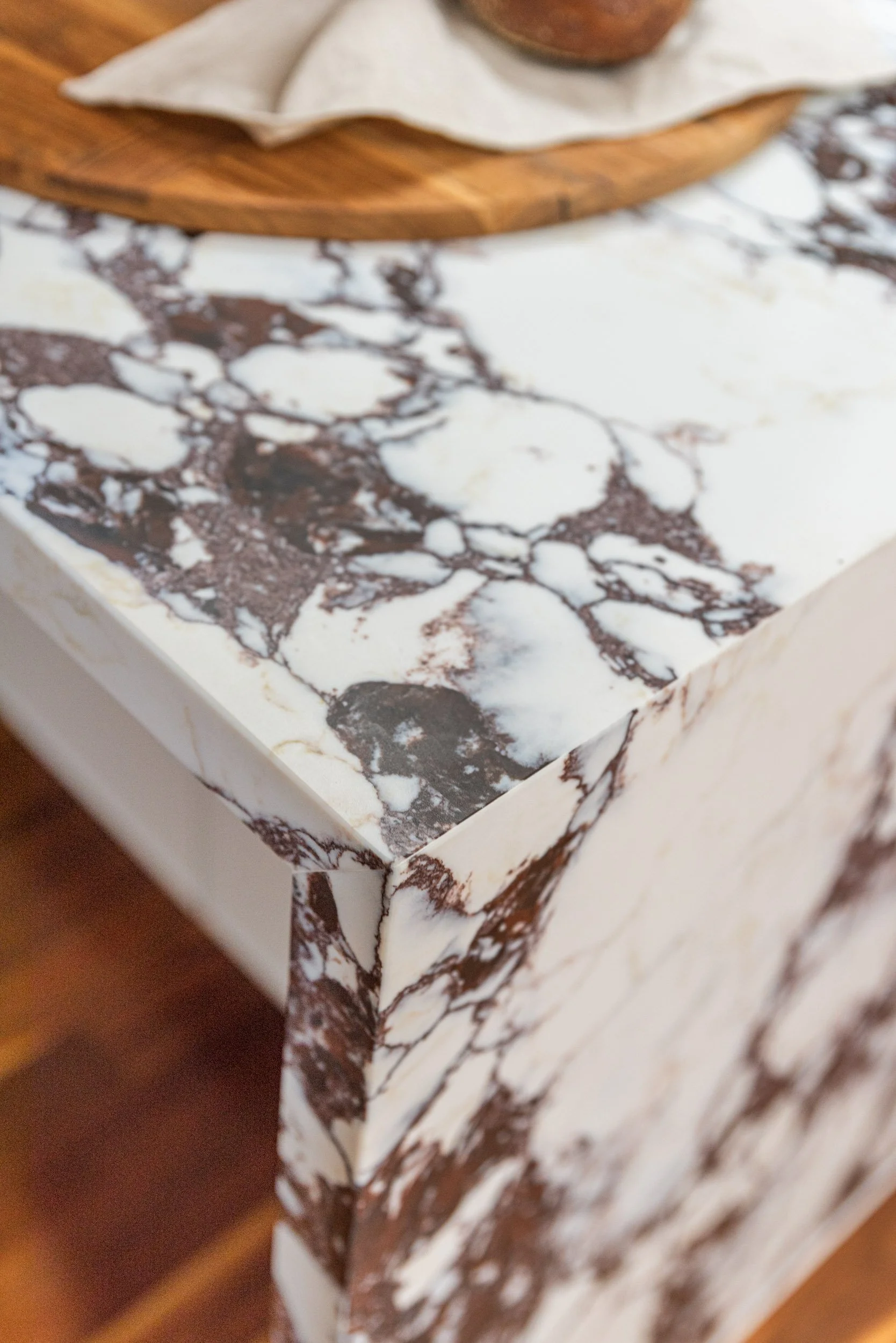
Natural stone includes materials such as marble, granite and quartzite.
Each slab is completely unique. Veining and movement run through the full thickness of the material, which means exposed edges, curves and profiles feel seamless.
From a design perspective, natural stone offers:
True depth and individuality
Sculptural edge detailing
Flexibility in shaping and profiling
A one-of-a-kind finish
However, natural stone does require sealing and ongoing care. Some varieties are more porous or susceptible to etching depending on use.
Who it suits:
Homeowners who value individuality, are comfortable with natural variation and want greater flexibility in edge profiles or curved forms.
Mineral Surfaces
(Silica-Free Alternatives)
Following the prohibition of high-silica engineered stone in Australia, manufacturers have developed silica-free mineral surfaces.
These surfaces offer:
Consistent pattern and colouring
Durability and stain resistance
Lower maintenance requirements
Controlled, predictable finishes
Many mineral surfaces are designed to achieve cohesive edge detailing, though they are generally less adaptable for complex shaping compared to natural stone.
From a planning perspective, they provide a reliable, practical option with controlled aesthetics.
Who they suit:
Households prioritising durability, consistency and ease of maintenance.
Sintered Stone Benchtops
Sintered stone is manufactured under extreme heat and pressure, creating a dense, high-performance surface.
It is:
Highly heat resistant
Non-porous
UV stable (making it suitable for outdoor kitchens)
Extremely durable
Patterning is digitally applied during manufacturing. To achieve continuous veining across edges or waterfall ends, mitring is often required. Fabrication flexibility varies depending on brand and slab thickness.
Sintered stone is often chosen where performance is the primary concern.
Who it suits:
Busy households, outdoor kitchens and clients prioritising heat resistance and minimal upkeep.
Porcelain Benchtops
Porcelain is a fired ceramic surface increasingly used in contemporary kitchen design.
It offers:
Heat resistance
UV stability
Lightweight slab options
Slim, modern profiles
Surface patterning does not typically run through the core of the slab. Exposed edges may appear solid unless mitred. Edge detailing is more limited compared to natural stone.
Porcelain works particularly well in minimal, contemporary designs where thinner profiles are desired.
Who it suits:
Clients seeking durability and a clean architectural finish.
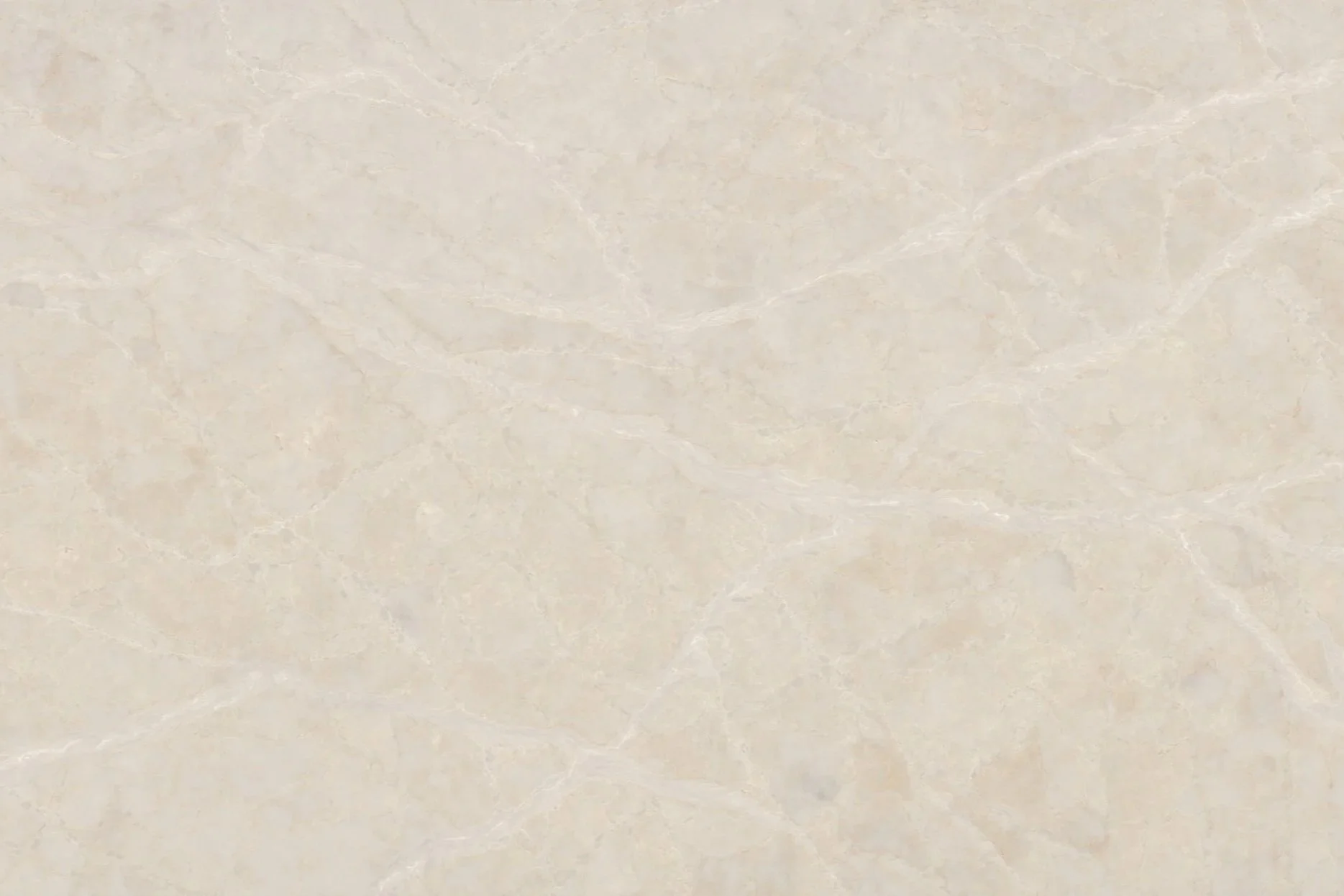
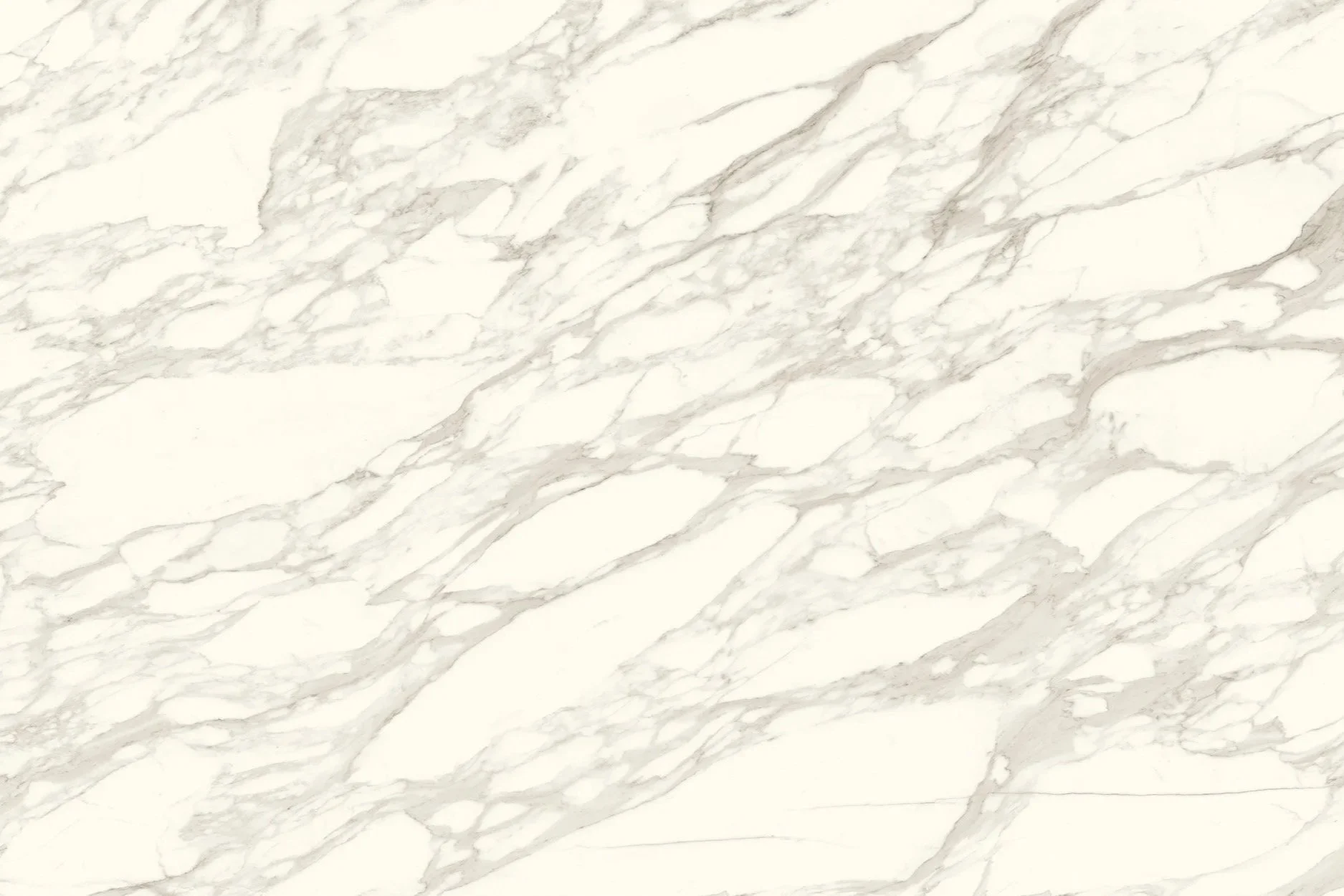
Common Benchtop Brands in the Australian Market
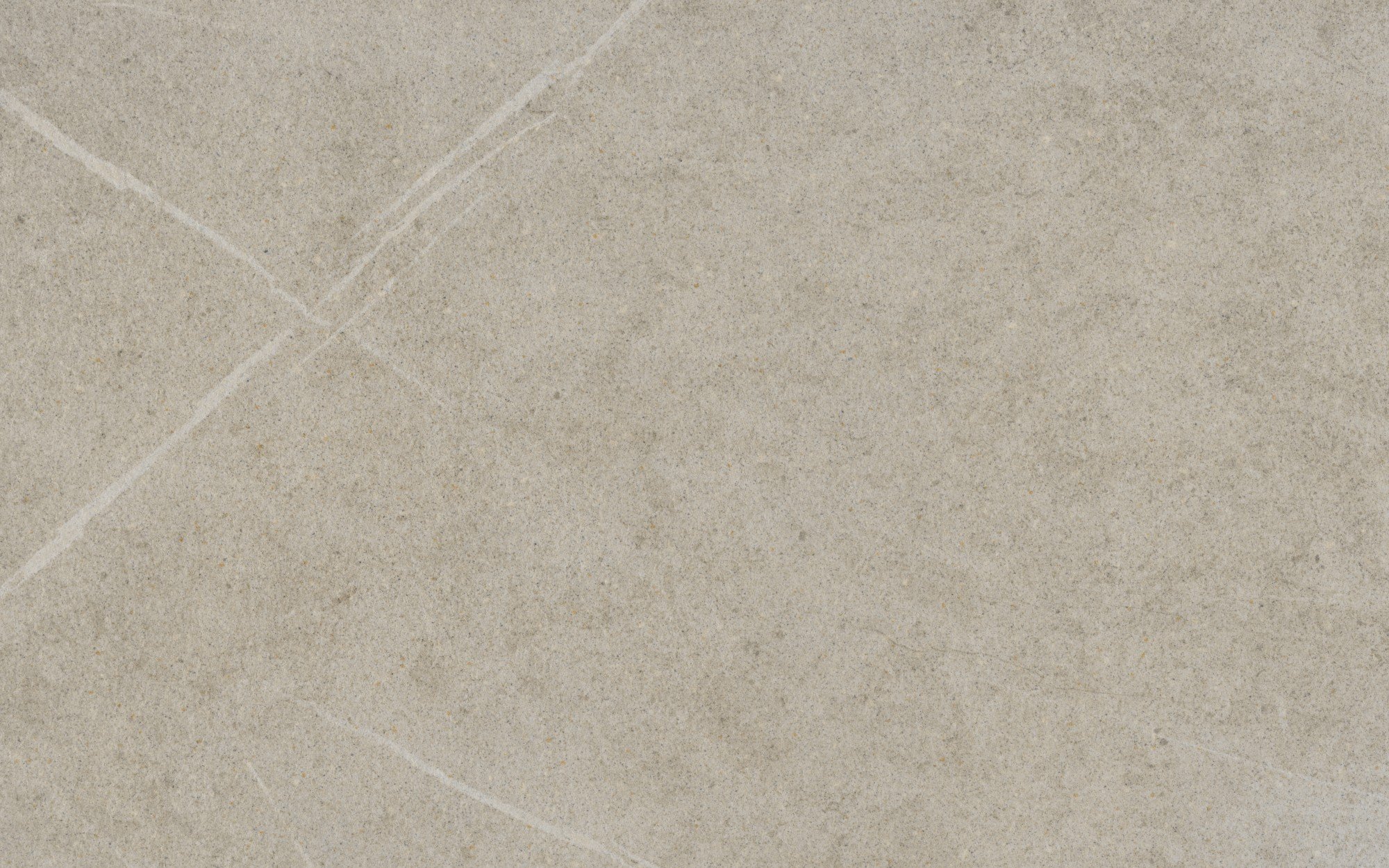
In Australia, examples of mineral, sintered and porcelain surfaces include products from brands such as Caesarstone, Talostone, Vadara Surfaces, Smartstone, Essastone, Dekton, Neolith and Laminam.
Each brand differs in composition, thickness options and fabrication requirements. This is why material selection should always be considered within the context of your overall kitchen design, not just the brand name.
Why Edge Detailing and Fabrication Matter
One of the most overlooked aspects of benchtop selection is how the material performs at the edge.
Natural stone has veining through the slab, allowing seamless curved profiles.
Mineral surfaces often achieve cohesive edges through controlled manufacturing.
Sintered stone and porcelain typically require mitring to create visual continuity on waterfalls or thicker profiles.
These differences affect:
Final appearance
Fabrication complexity
Installation cost
Long-term durability
This is why benchtop selection is not simply a showroom decision.
So Which Kitchen Benchtop Is Best?
There isn’t one.
The right surface depends on:
How you cook and use your kitchen
Your tolerance for maintenance
The detailing required in your joinery design
Whether the kitchen is indoor or outdoor
Your budget and long-term investment priorities
When I design kitchens for renovation and new-build clients in Sydney, I don’t simply select what looks beautiful on installation day. I select the material that supports how you live.
Because good design isn’t just seen. It’s felt in how a space functions every day.
Benchtop selection should be intentional.
Planning a Kitchen Renovation in Sydney?
If you’re planning a kitchen renovation or building a new home, selecting the right benchtop material is a decision worth approaching with care.
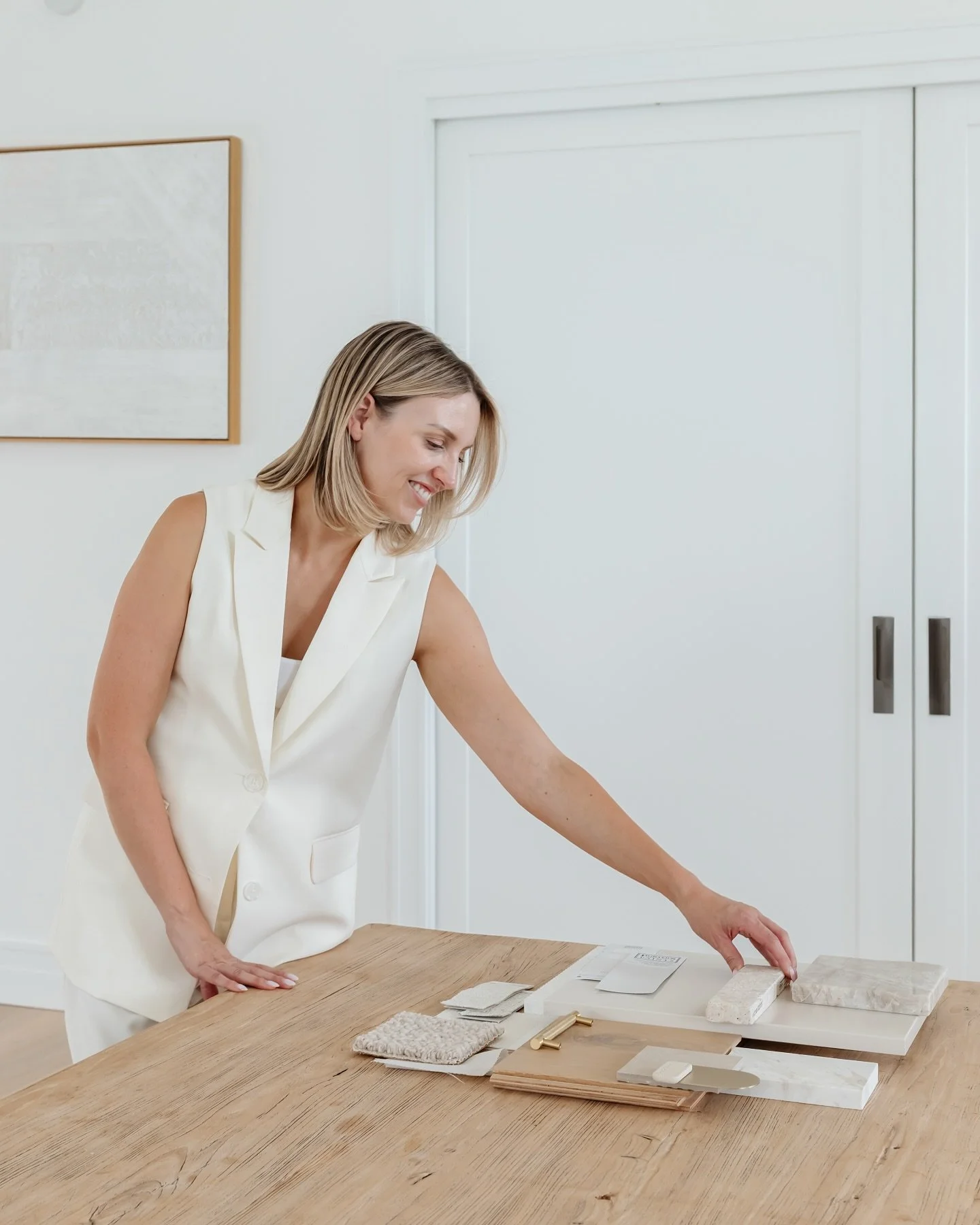
As a Sydney interior designer specialising in residential renovations and new builds, I provide structured guidance across layout planning, joinery design and material selections to ensure every element performs as well as it looks.
If you would like support selecting the right kitchen benchtop for your home, you can enquire about an initial consultation here.